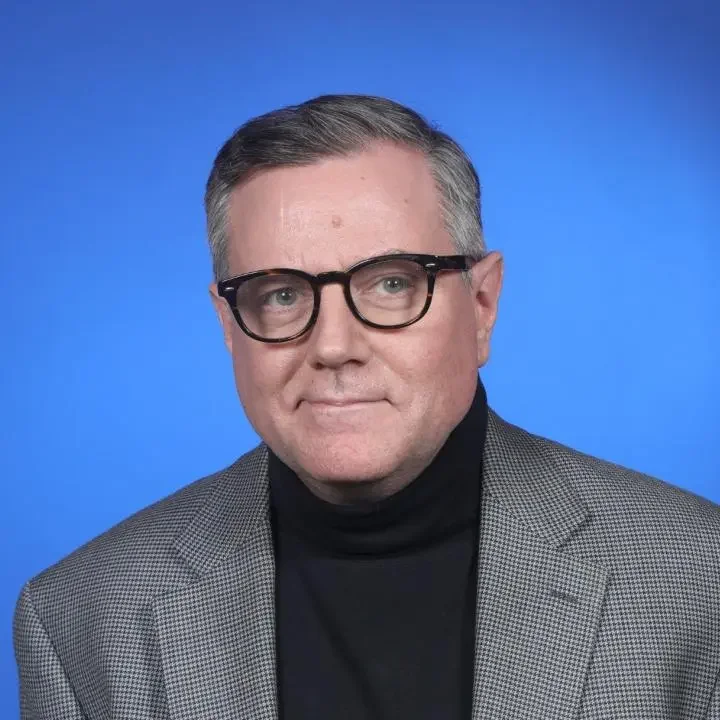
Dr. Kier Hanratty
Dr. Kier Hanratty is a faculty member in the Department of Economics at Pace University in New York. Originally from New York City, he holds a PhD in Public and Urban Policy from the Milano School of Policy, Management, and Environment at The New School, as well as Master’s degrees in Urban Planning and Urban Policy and Management. His research focuses on state and local public finance, NYC property tax structures, and the economic impacts of paid family leave on entrepreneurs and local communities.
Driven by passion
Where can I find Dr. Hanratty?
-
To meet with Professor Hanratty, you can book a time during his office hours via email. Professor Hanratty is also consistently in his office and warmly welcomes student walk-ins.
• Email: khanratty@pace.edu
• Location: 41 Park Row, 11th Floor, Office #1127
-
• ECO 105: Principles of Economics: Macroeconomics
• ECO 106: Principles of Economics: Microeconomics
• ECO 240: Quantitative Analysis & Forecasting
• ECO 354: Urban Economics
• ECO 356: Labor Economics
• ECO 385: Econometrics
• ECO 400: Seminar in Economic Theory
• ECO 690: Graduate Public Economic Policy Analysis / Public Finance
-
Hanratty feels strongly that students should get involved outside the lecture hall through department competitions and student research organized by fellow professors:
• Competitions & Clubs: Federal Reserve College Challenge Team, Fiscal Challenge, and EconHacks.
• Funded Research: Students can collaborate on applied research projects funded through the Pace Undergraduate Research Office.
• Department Events: Attend economics seminars, guest speaker panels, and brown-bag workshops to connect with faculty and peers.
Hanratty's Philosophy is...
Many students feel economics is too technical because high school math classes make people dread the subject, but the math in economics is often trivial—it’s just the algebra within calculus that trips people up. Calculus was independently developed back in the 1600s and 1700s by Newton in England and Leibniz in Germany. In the 300-plus years since, millions of people have mastered it; there is absolutely no reason you can’t too. Economics gives real-world context to the algebra, and anyone can learn it with patience and practice.
Outside the Classroom…
Before finding his calling in economic analysis, Dr. Hanratty completed a BA in Geography and worked in city planning as a GIS specialist. His own undergraduate experience felt abstract until graduate school provided the intuitive framing and real-world context for the math, where mentors pointed out that he naturally analyzed urban policy questions through an economic lens. Because of his own journey, he is dedicated to teaching foundational economics so students develop a genuine appreciation for the field early on. Today, his academic work investigates public finance, municipal property tax disparities, and how social policy supports local workers and entrepreneurs.
One fun fact about Professor Hanratty is that his go-to campus coffee order is Dunkin’ coffee with cream and sugar—and he firmly insists that Dunkin’ brews the best coffee in the city, no debate.
One podcast recommendation for Economics students from Dr. Hanratty is Ones and Tooze (or the “Public Money Pod”).
Some reading recommendations from Dr. Hanratty include…
Crashed: How a Decade of Financial Crises Changed the World by Adam Tooze
When All Else Fails: Government as the Ultimate Risk Manager by David A. Moss
Growing Public: Social Spending and Economic Growth Since the Eighteenth Century by Peter H. Lindert
Open: The Progressive Case for Free Trade, Immigration, and Global Capital by Kimberly Clausing
Property Taxes and House Values: The Theory and Estimation of Intrajurisdictional Property Tax Capitalization by John Yinger
The Economics of Zoning Laws: A Property Rights Approach to American Land Use Controls by William A. Fischel
Preference, Value, Choice, and Welfare by Daniel M. Hausman
Varieties of Capitalism: The Institutional Foundations of Comparative Advantage by Peter A. Hall and David Soskice
The Three Worlds of Welfare Capitalism by Gøsta Esping-Andersen